Detailed specification of every element:
- Exact materials, quantities, and specifications
- Dimensions and locations
- Quality standards and installation specifications
- What’s included—and explicitly what’s not included


The Complete Guide to Avoiding the 53% Budget Disaster
Choosing a landscape contractor is one of the most consequential decisions homeowners make. Get it right, and you transform your property into an outdoor environment that enhances daily life and increases home value. Get it wrong, and you join the 53% of landscape project clients whose budgets spiral beyond control—or the 46% whose projects drag months past promised completion.
This guide provides everything Madison-area homeowners need to make an informed decision: the red flags that signal trouble, the questions that reveal contractor quality, the credentials that matter, and the contract essentials that protect your investment.
Whether you’re investing $15,000 or $150,000+, the principles are identical: informed homeowners make better decisions.
| Industry Problem | Rate | Impact |
|---|---|---|
| Budget Overruns | 53% | Average 20-40% over original estimate |
| Significant Delays | 46% | Weeks or months beyond promised completion |
| Communication Failures | #1 | Most common contractor complaint |
| Water Damage from Poor Drainage | 22.6% of claims | $15,000+ average repair cost |
These aren’t rare exceptions—they’re statistical reality. When you hire a landscape contractor, the odds are literally against you experiencing the budget and timeline you were promised.
Why This Happens:
The landscape industry has minimal barriers to entry. Anyone with a truck and shovel can advertise as a “landscaper.” No license required for most work. No certification mandatory. No standardized process enforced.
This creates a market flooded with operators ranging from genuinely skilled craftsmen to complete amateurs—with no easy way for homeowners to distinguish between them.
The Good News:
The contractors who do invest in proper credentials, systematic processes, and communication excellence are easily identifiable—if you know what to look for.
Before hiring any landscape contractor in Madison or the greater Jackson metro, ask these questions—and evaluate both the answers and how they're answered:
Look for: Specific credentials from recognized organizations. ICPI certification for hardscape. Horticulture licensing for plant work. Vague answers signal vague qualifications.
Look for: Established local presence. Contractors with years of local history have reputation investment. Recent arrivals may lack understanding of local conditions.
Look for: Focused expertise. Contractors juggling commercial, residential, maintenance, and construction may lack depth in any area.
Look for: Systematic phases with clear deliverables. Contractors who skip discovery and design directly to construction are setting up failure. The 53% overrun rate starts with inadequate planning.
Look for: Locked pricing based on detailed scope. If pricing changes based on “we’ll see what we find,” expect budget expansion.
Look for: Documented change order process with client approval before additional costs. Never assume problems won’t occur—evaluate how they’ll be handled.
Look for: Single point of contact who handles communication. Multiple contacts create confusion and accountability gaps.
Look for: Specific commitment to update frequency. Communication failure is the #1 contractor complaint—contractors who haven’t thought about this will deliver poor communication.
Look for: Written guarantees specifying what’s covered, for how long, and how issues are resolved. Verbal assurances are worthless.
Look for: Current references readily provided. Hesitation or excuses signal problems.
Look for: Willingness to show work. Contractors proud of their work welcome visibility.
Beyond "Years of Experience"
Every contractor claims "experience." Credentials represent verified competence that you can evaluate objectively.
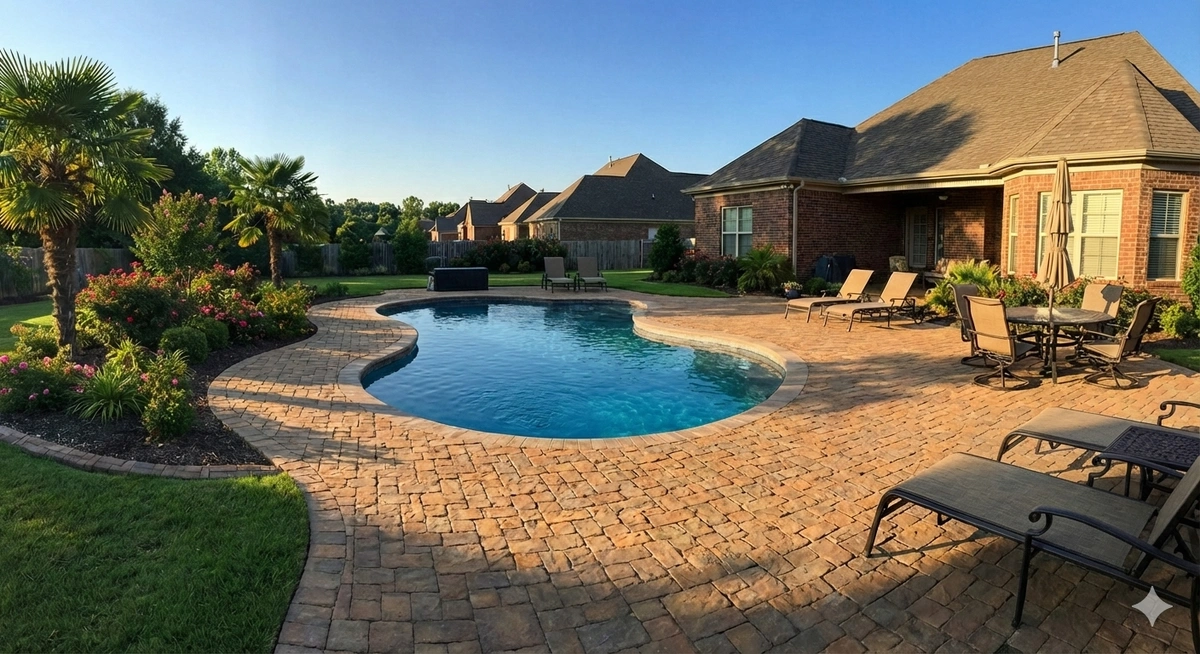
What It Is: Certification demonstrating proper knowledge of paver, permeable pavement, and segmental retaining wall installation. Requires examination and continuing education.
Why It Matters for Your Project:
Hardscape installation looks simple—until improperly installed pavers settle, shift, and fail within years. ICPI certification ensures contractors understand:
Market Reality: In the Madison/Jackson metro, ICPI-certified landscape contractors are extremely rare. Most installations are performed by uncertified crews following shortcuts that lead to premature failure.
What It Is: State-recognized credential demonstrating professional-level plant knowledge, typically requiring examination and continuing education.
Why It Matters for Your Project:
Plants are living investments. Wrong selections fail. Improper installation kills healthy plants. Inappropriate placement leads to maintenance problems or death.
Licensed Horticulturalist credentials ensure:

What It Represents: Years of successful operation in the local market.
Why It Matters:
The landscape industry has high turnover. Contractors who survive long-term have:
Evaluating Longevity: Ask specifically about continuous operation. Some claim “20 years experience” while having recently started their own business. There’s a difference between 20 years working in the industry and 20 years operating a successful business.

Detailed specification of every element:
Coordination failure drives much of the 46% delay rate and contributes significantly to budget overruns.
Many landscape projects involve multiple contractors: designer, hardscape installer, planting crew, lighting installer, irrigation specialist. Each operates independently with no integration.
The Coordination Problem:
When something goes wrong—and something always goes wrong—who’s responsible? The designer blames the installer. The hardscape crew blames the irrigation contractor. The homeowner is left mediating disputes between parties with no accountability to each other.
The Design-Build Solution:
Design-build contractors handle everything under one roof: design, installation, and project management. Single point of contact. Single team. Single accountability.
Benefits:
When evaluating contractors, consider whether fragmented contractors or integrated design-build better serves your project’s success.


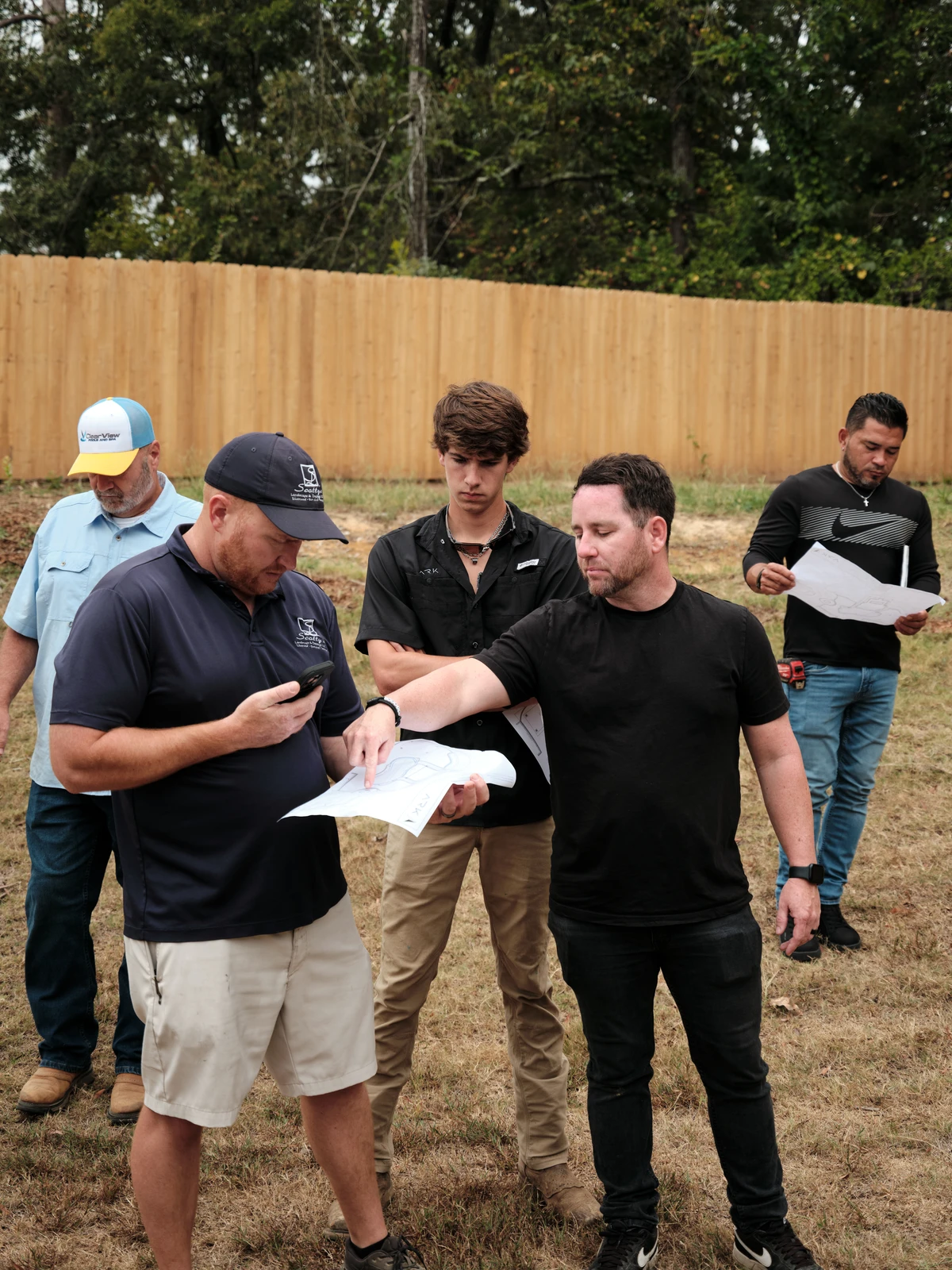


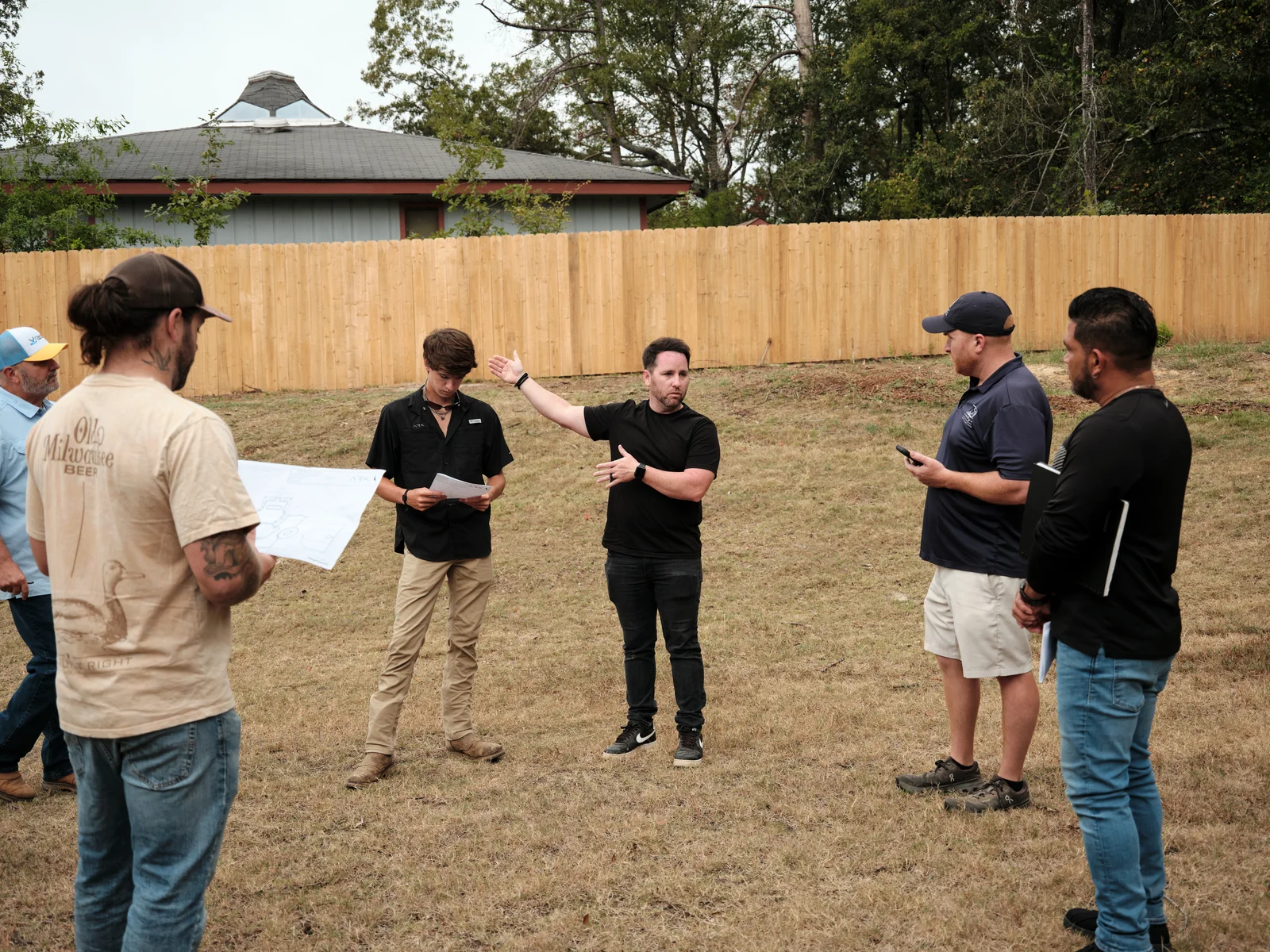

Informed homeowners make better decisions. If you're ready to discuss your landscape project with a contractor who meets the criteria outlined in this guide, we welcome the conversation.
Ask them to walk through their process from first contact to project completion. Contractors who skip planning and rush to installation are setting up the budget overruns and delays that plague the industry. A systematic, documented process is the single best predictor of project success.
Request specific credential names (not just “we’re certified”), then verify with issuing organizations. ICPI certification is verifiable at icpi.org. State licensing can be verified through state boards. Legitimate contractors welcome verification.
Yes, but compare more than price. Evaluate credentials, process, communication approach, and references. The lowest bid often indicates corners that will be cut or scope that will expand. Compare proposals on equivalent scope before comparing price.
Standard practice is 10-20% deposit, with progress payments tied to milestones and final payment upon completion. Be cautious of contractors demanding 50%+ upfront before any work begins.
Look for: established local presence (years, physical address), verifiable credentials, readily provided references, documented process, and clear communication from first contact. How contractors handle the sales process typically predicts how they’ll handle the project.
Address concerns immediately, in writing. Document the issue and reference your contract’s quality standards. Quality contractors welcome feedback and address issues. Resistance to correction signals problems that will only worsen.
The 10-year difference between properly installed pavers and budget installations makes certification valuable. ICPI certification ensures proper base preparation, edge restraints, and drainage—the elements that determine whether pavers last decades or fail within years.
Integrated design-build firms eliminate coordination problems that cause delays and cost overruns. When designer and installer are different companies, problems have no single accountable party. Design-build integration typically delivers better outcomes.